

Storage is one of those problems that grows invisibly. A garage that was perfectly adequate five years ago is now packed to the rafters with tools, camping gear, sporting equipment, and the various objects that accumulate in an active household. On a working farm or commercial property, the problem compounds further — equipment, stock, and materials that need to be protected, organised, and accessible.
For many Western Australians, a purpose-built storage shed is the straightforward answer to a problem that’s been tolerated for too long. Not a temporary plastic lean-to from the local hardware store, but a proper engineered structure designed for the specific demands of how the space will actually be used.
This article covers the full range of storage shed applications from suburban Perth households to commercial operators and rural properties and examines what a quality build actually involves, including the design factors, material choices, and planning considerations that determine whether a shed performs well or frustrates its owner within a few years.
Why Purpose-Built Storage Sheds Outperform Flat-Pack Alternatives
The appeal of a flat-pack shed from a hardware retailer is obvious: lower upfront cost and faster delivery. But the performance gap between a flat-pack structure and a purpose-built steel shed becomes apparent quickly once the shed is in use.
Flat-pack structures are manufactured to standard dimensions using minimum-specification materials. They’re designed to a price point, not a performance standard. In Perth’s climate where summer temperatures can exceed 40 degrees, winter rain arrives with force, and coastal properties face salt-laden air year-round, that difference in specification matters significantly.
A purpose-built storage shed, constructed from certified Australian steel, engineered for your specific site conditions, and properly anchored to a concrete slab, offers:
- Genuine wind resistance appropriate to your geographic wind rating
- Dimensional stability — frames that don’t warp, rack, or shift over time
- Doors that continue to function correctly after years of use
- A manufacturer-backed warranty on the steel itself
- Customised dimensions to actually fit your space and storage needs
The total cost of ownership calculation almost always favours the quality build when you account for the maintenance, replacement, and frustration costs of inferior structures over a 10 to 20-year period.
Residential Storage Sheds: What Perth Homeowners Are Looking For
For residential applications, storage shed projects in Perth typically fall into a few common categories, each with slightly different design requirements.
Garden and General Storage
The most common starting point — a secure, weatherproof space for garden equipment, outdoor furniture stored in winter, kids’ toys and sporting gear, and the general overflow of household items that don’t belong inside. Key priorities are accessibility (wide doors, easy floor clearance), good security, and a design that doesn’t look out of place beside the house.
Vehicle and Equipment Storage
Caravans, boats, motorbikes, trailers, and quad bikes all represent significant investments that deteriorate faster outdoors than under proper cover. Sheds designed for vehicle storage need to consider access, how the vehicle enters and exits as well as height clearance, door width, and floor load capacity for heavier items.
Hobby and Project Space
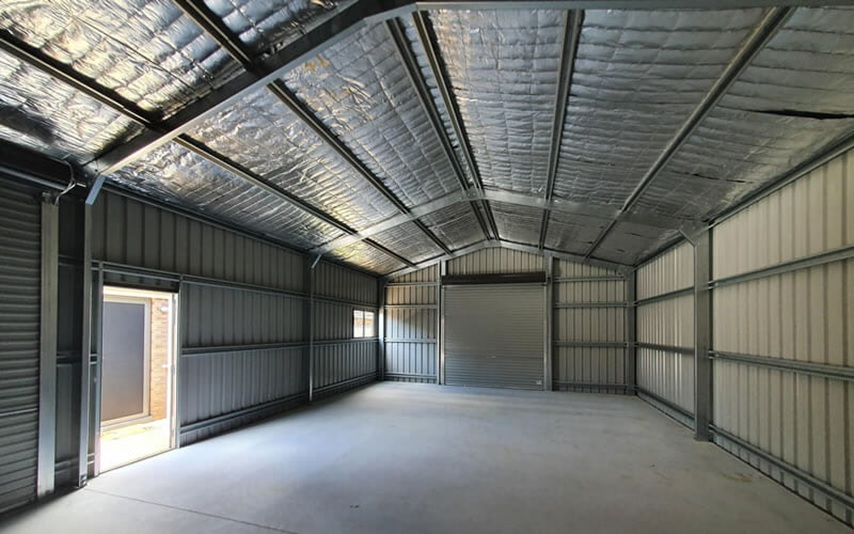
Increasingly, residential storage sheds double as hobby rooms or project spaces. A woodworker, artist, or home brewer needs storage that’s also comfortable, well-lit, and functional. These builds benefit from insulation, power provisions, and ventilation designed in from the start.
Garage Sheds: Storage and Vehicle Protection Combined
For many Perth homeowners, a garage shed offers the most practical combination: covered vehicle storage alongside dedicated storage space in a single structure. This combined approach is particularly effective on suburban blocks where separate structures would either not fit or not be permitted.
Design tips for maximising storage within a garage configuration:
- Install heavy-duty wall rails and shelving along one or both side walls
- Consider a mezzanine level above the vehicle area for bulk seasonal storage
- Designate a utility zone near the pedestrian door for frequently accessed items
- Use overhead storage tracks or racks for items like kayaks, ladders, or surfboards
Getting the bay width right is critical here, a double garage intended for two vehicles plus storage needs more than just the minimum clearance for two car doors to open comfortably. Allow for the storage footprint in your calculations before you finalise the dimensions.
Industrial Sheds: Storage at Commercial Scale
Commercial and industrial sheds operate to a different specification than residential builds. Larger footprints, higher clearance requirements, heavier floor loads, and compliance with workplace safety standards all shape the design.
Storage at commercial scale involves considerations that simply don’t arise in a residential context:
- Forklift access — aisle widths, floor flatness tolerances, and door dimensions for pallet jack and forklift operation
- Racking systems — structural provisions for heavy industrial shelving mounted to the frame or slab
- Fire safety — clearance requirements around stored materials, sprinkler provisions where applicable
- Security — roller shutter doors, access control, perimeter lighting
- Multiple access points — large goods in, small goods out, separate pedestrian access
For business operators commissioning a commercial storage shed, working with a builder who understands these requirements and can incorporate them into the design, rather than retrofitting them to a standard shed configuration, results in a structure that functions as a genuine operational asset rather than just a big covered space.
Machinery Sheds: Purpose-Built Storage for Rural Properties
On agricultural and rural properties, storage sheds take the form of machinery sheds structures designed around the specific dimensions and weights of farming equipment. A modern header, for example, requires a very different building to a garden shed: significant height clearance, a wide clear span to accommodate the header table width, and a reinforced slab capable of handling the machine’s weight.
Well-designed machinery sheds share several characteristics:
- Clear span widths of 12m to 24m or more, without internal posts
- Heights of 5m to 7m to accommodate tall machinery
- End bays with wide roller doors for equipment access
- Sealed or reinforced concrete floors with appropriate load ratings
- Ventilation provisions to prevent condensation on steel equipment
The investment in a properly engineered machinery shed pays for itself in avoided repair costs for equipment that would otherwise be exposed to UV, moisture, and temperature cycling throughout the year.
Sheds in Perth: Planning for Winter Performance
One aspect of storage shed design that’s worth addressing specifically for sheds in Perth and the broader WA region is winter performance. Perth winters bring meaningful rainfall and for a storage shed, how the structure handles water is critical.
Design elements that determine winter performance:
Roofing Pitch and Drainage
A steeper roof pitch sheds water more efficiently and reduces the risk of standing water on the roof surface which adds weight and accelerates wear on the cladding over time. Guttering and downpipes should direct water well away from the slab base.
Floor Level and Site Drainage
The slab should sit above the surrounding ground level, with the site graded to drain water away from the structure. This is especially important on Perth’s sandy soils, which can become saturated quickly during heavy rainfall events and allow water to migrate under the slab edge.
Door and Penetration Sealing
Even well-designed sheds can suffer water ingress through inadequately sealed roller door bases, door jambs, and penetrations for power conduits. These details are worth discussing explicitly with your builder and confirming as part of the handover inspection.
Residential Sheds: Getting the Design Right from Day One
For homeowners commissioning residential sheds, the design stage is where the most important decisions are made and where the most common mistakes occur. The temptation to minimise size to reduce cost almost always results in a shed that’s outgrown within two to three years.
Questions worth answering honestly before finalising the design:
- What will I be storing in five years, not just today?
- Do I need vehicle access, or is pedestrian access adequate?
- Will I ever want power in this shed — for lighting, tools, or refrigeration?
- What colour would complement my house rather than clash with it?
- Am I in a bushfire-prone area that requires BAL-rated construction?
A good builder will walk through these questions with you before producing a design, not after. The answers shape every element of the build from the structural specifications to the door hardware.
Conclusion
Storage sheds are one of those investments that improve daily life in ways that are easy to take for granted until the storage problem returns. Getting the design right, appropriate for the application, properly engineered, and built from quality materials, creates a structure that performs for decades rather than years.
Whether the requirement is a modest backyard shed for garden tools, a large vehicle storage shed with workshop space, a commercial warehouse facility, or a machinery shed for a working property, the fundamentals of a quality build remain consistent: proper engineering, certified steel, a solid slab, and a builder who takes the time to understand how the space will actually be used.
In Perth’s winter climate, a well-built storage shed isn’t just a convenience, it’s genuine protection for the assets that matter most.